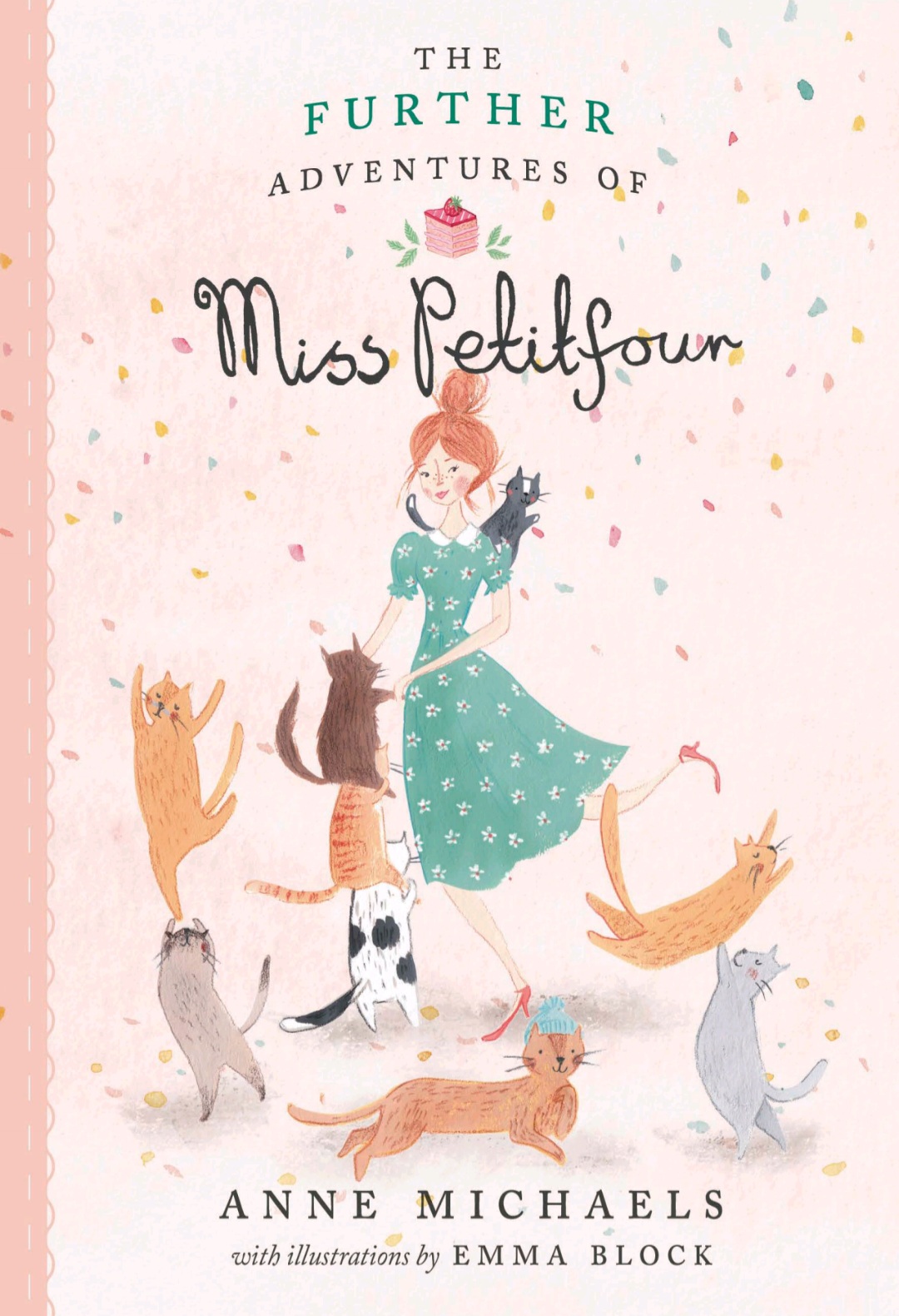
Today’s review will be pretty short, as I’m reviewing the ARC (provided by NetGalley) of a children’s book by Anne Michaels (illustrated by Emma Block).
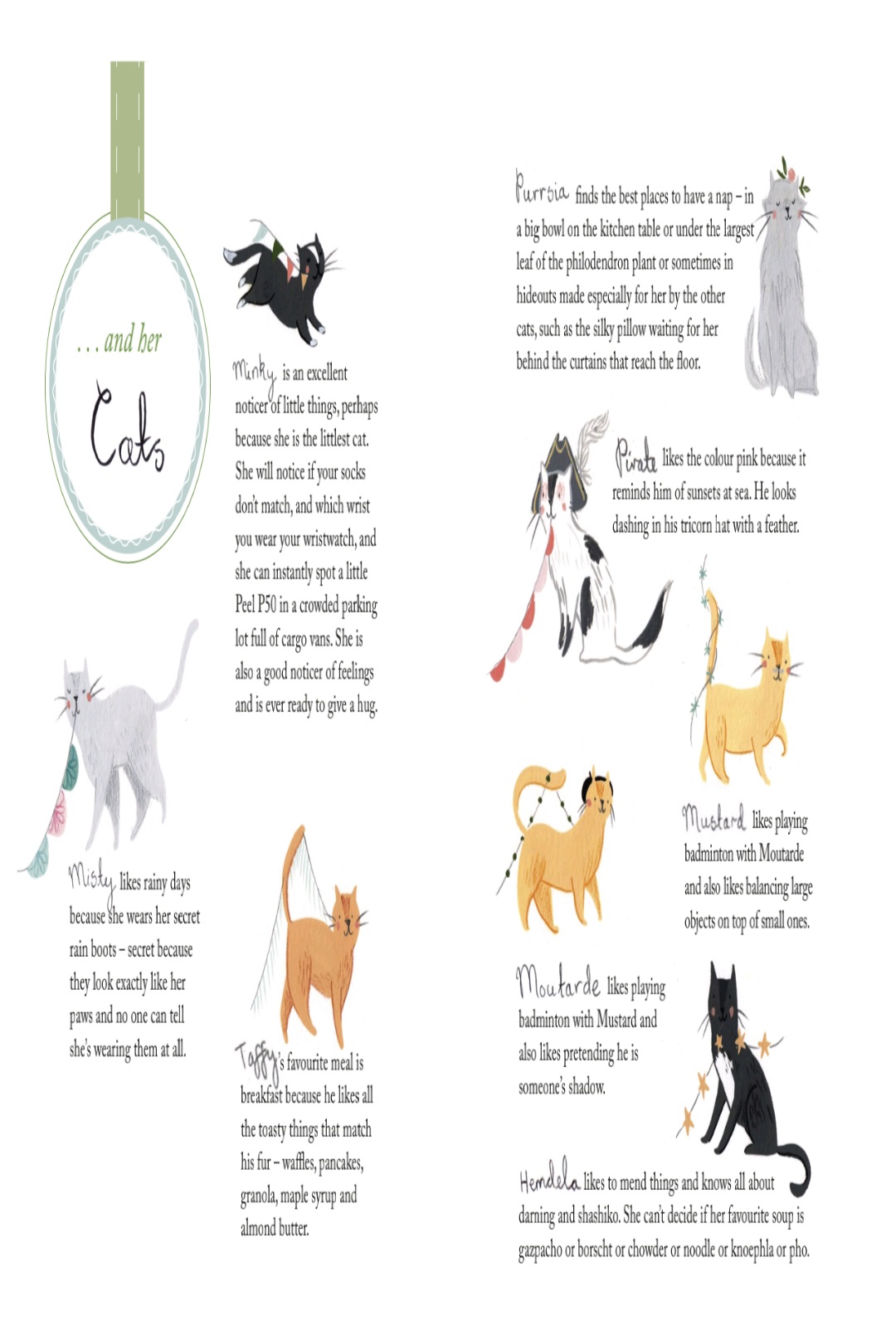
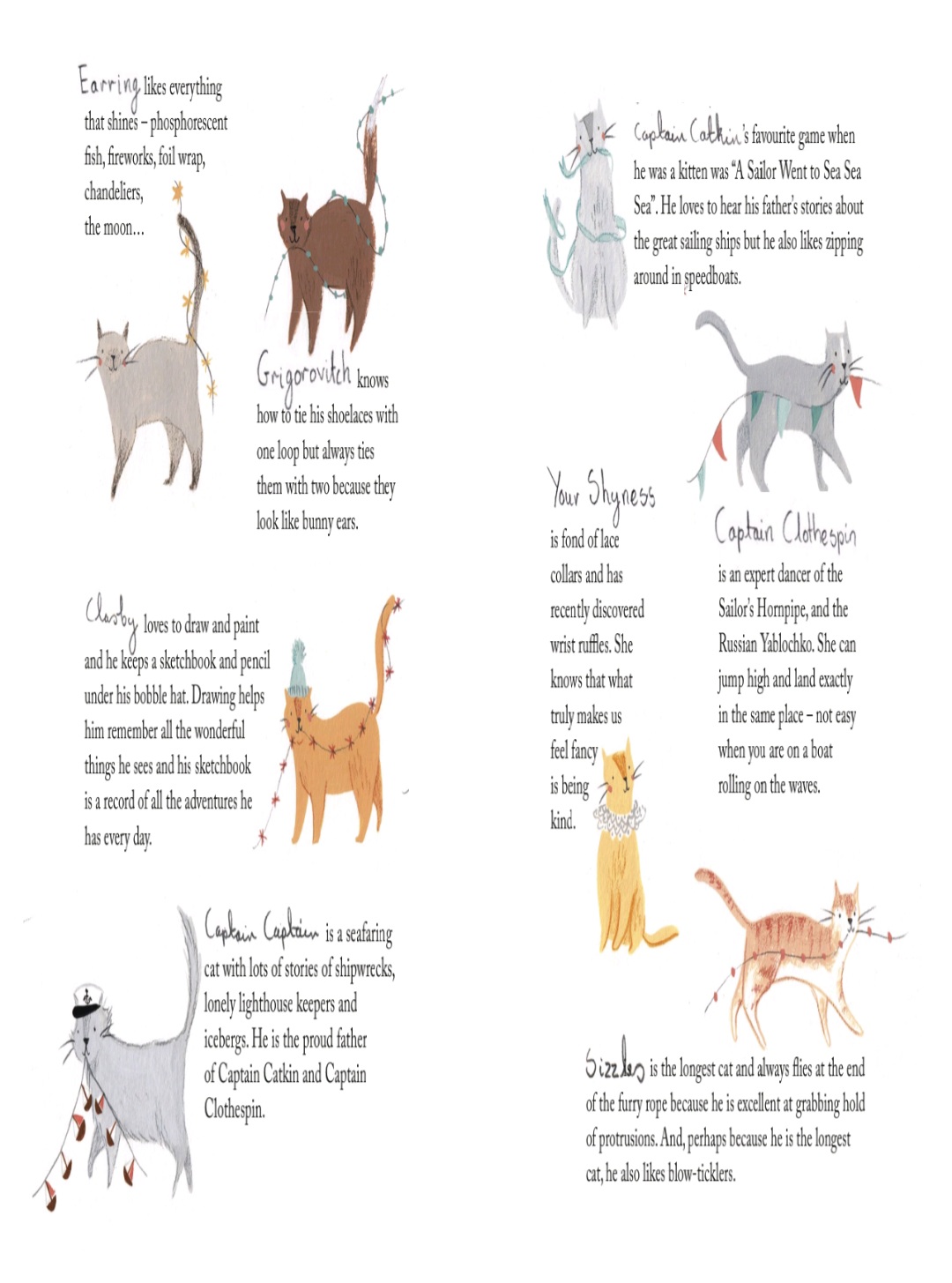
I had both pros and cons with this story, but let’s start with the pros. I really enjoyed the character introductions, placed right before the stories themselves actually begin. With beautiful illustrations of Miss Petitfour and all her cats, and little tidbits about what makes them, well, them, I thought this was a fun addition to the book and a really good idea as a way to keep track of the characters as you read.
I loved reading about each of the cats and learning about their behavior; each cat is unique, yet all of them find enjoyment and appreciation in simple things. That idea, of finding joy in the simple things, carries into some of the stories; for example, in the fifth story, Miss Petitfour and the Key, there is a small section where we learn about the different lists kept by each of the cats, such as “The Longest Words I Know,” and “Things Smaller Than My Paw.”
I also noted that Miss Petitfour seemed to be an excellent portrayal of a character with intense ADHD, from randomly going on tangents about onions to the different kinds of wind speeds.
In theory, this book is a great mix of Mary Poppins and Mrs. Piggle-Wiggle, with a bit of Pinkalicious–all characters and stories that children enjoy. I also liked that this was, again in theory, a fun way to introduce new words and their meanings to young children–words they probably hadn’t heard before were often in a different color, followed by a definition relating to the story.
You’ll notice that I’ve used the words “in theory,” and this is because, while the idea was to introduce new words outside of a classroom, it could have been executed more cleanly and in an easier to understand way. I found that the more the stories went on, the harder they became to follow, as not only does the story get off track increasingly often, but the instances used in the definitions began to seem unrelated to any piece of the story at all. Given my initial thought that the character of Miss Petitfour has what is presumably undiagnosed ADHD, I enjoyed the initial idea that there would be an occasional digression, something I could relate to extremely well; unfortunately, they began to happen too often, and it grew annoying the more these digressions continued.
Another thing that made this book difficult to follow was the names of random characters–while some of them were pretty simple, like “Mrs. Collarwaller,” a lot of them began to border on what I could only refer to as nonsensical insanity. Many of these names were absurdly long, such as “Helena Serge-Bonnet-Highleigh-Leapleigh-Pitchwell-Overleigh-Balderson-Blaskett.” There’s a long list of names like that one, and not only are they difficult to pronounce, but they turn even a simple sentence into a run-on–something that was already beginning to happen rather frequently. I have to wonder, if an adult has a hard time pronouncing these names, how would a child ever be reasonably expected to do so themselves?
Something that bothered me with all of these stories was the implication that the cats were able to eat things like chocolate caramel cake and cinnamon buns. Not only is it inaccurate, but children who enjoy the book, and are too young to realize it is entirely fictional, would undoubtedly try and feed these treats to their own cat. While liberties are of course taken with fiction of any kind, specifically in a fantasy like this one, I really did feel like a parent would find themselves having to tell their children not to do a number of things from this book.
Overall, what started as a somewhat promising children’s novel, ultimately left me frustrated and slightly disappointed. It was, to sum up, difficult to read and follow, let alone actually enjoy it, and it was a forced challenge to finish it. I give this two stars with the suggestion of a strong rewrite–the best parts were by far the illustrations by Emma Block, along with the initial descriptions in the character introductions.
 SheReadsWorlds